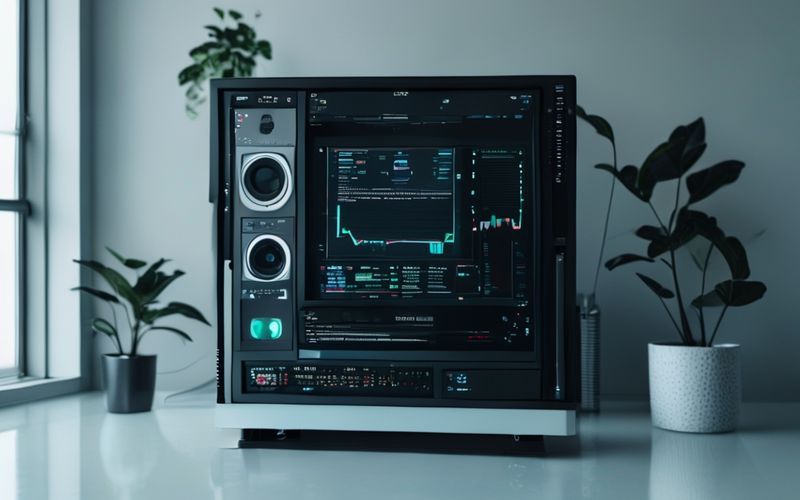
"Build Your Own Private AI Server at Home for Under $500: A Beginner's Guide"
Build Your Own Private AI Server at Home for Under $500: A Beginner's Guide
As artificial intelligence (AI) continues to revolutionize various industries and aspects of our lives, many individuals are eager to explore the world of AI and machine learning. One of the most significant barriers to entry is the cost of accessing powerful AI computing resources. However, with the right guidance, you can build your own private AI server at home for under $500.
Join thousands of learners upgrading their career. Start Now
In this comprehensive guide, we'll walk you through the process of building a private AI server that can handle various machine learning tasks and experiments. You'll learn how to choose the right hardware components, assemble the server frame, install an operating system, set up AI software, and troubleshoot common issues.
What You'll Need to Get Started
Before we dive into the nitty-gritty details of building your private AI server, let's take a step back and identify the essential components you'll need. Here are the key hardware requirements:
Hardware Requirements
- Motherboard: A good quality motherboard with support for multiple CPU sockets is crucial.
- CPU (Central Processing Unit): Choose a CPU that suits your budget and performance needs.
- Power Supply: Select a power supply that can handle the total power consumption of all components.
- Case: A well-ventilated case with ample room for future upgrades is essential.
- Cooling System: You'll need a reliable cooling system to keep your server running smoothly.
- RAM (Memory): Aim for at least 16 GB of DDR4 RAM, which is suitable for most AI tasks.
Power Supply Options
When selecting a power supply, consider the total power consumption of all components. A minimum of 400W is recommended. You can opt for a:
- Modular power supply: Offers greater flexibility and ease of installation.
- Semi-modular power supply: Balances flexibility and cost-effectiveness.
- Non-modular power supply: Provides simplicity but may be less flexible.
Motherboard and CPU Selection
When choosing your motherboard and CPU, keep the following factors in mind:
- Compatibility: Ensure that the motherboard supports the CPU you've chosen.
- Performance: Select a CPU with a high clock speed (measured in GHz) for better performance.
- Power Consumption: Consider the power consumption of the CPU to avoid overheating.
Building the Server Frame
Now that we have our hardware requirements sorted, let's focus on building the server frame. This involves selecting the right case and installing the motherboard and CPU.
Choosing the Right Case
When selecting a case, consider the following factors:
- Size: A mid-tower or full tower case provides ample room for upgrades.
- Cooling: Opt for a case with good airflow to keep your components cool.
- Expansion Slots: Ensure that the case has enough expansion slots for future upgrades.
Installing the Motherboard and CPU
To install the motherboard and CPU, follow these steps:
- Mount the motherboard to the case using screws or clips.
- Install the CPU onto the motherboard according to the manufacturer's instructions.
- Secure the CPU with a screw or clip.
Adding Cooling and Fans
To keep your server running smoothly, add a cooling system and fans:
- Case Fans: Install at least two fans on the case for airflow.
- CPU Cooler: Choose a reliable cooler for your CPU.
- Radiator (Optional): Consider adding a radiator for extreme cooling needs.
Assembling the Storage and Memory
Now that our server frame is built, let's focus on assembling the storage and memory components.
Selecting the Perfect Hard Drive or SSD
For AI tasks, you'll need a fast and reliable storage solution. You can choose between:
- Hard Disk Drive (HDD): Suitable for large data storage but slower.
- Solid-State Drive (SSD): Faster and more reliable for AI workloads.
RAM Upgrades for Your AI Needs
Aim for at least 16 GB of DDR4 RAM, which is suitable for most AI tasks. You can upgrade to:
- DDR5 RAM: For even faster performance and compatibility with newer motherboards.
- ECC (Error-Correcting Code) RAM: For enhanced reliability in mission-critical applications.
Adding a Solid-State Drive (SSD) for Faster Performance
Consider adding an SSD as a boot drive or cache to improve overall performance. Choose one that:
- Has enough storage capacity for your OS and programs.
- Supports NVMe protocol for faster speeds.
Installing an Operating System and Setting Up AI Software
Now that our server is assembled, let's focus on installing an operating system and setting up AI software.
Choosing the Right OS: Linux, Windows, or macOS?
For AI workloads, you can choose from:
- Linux (Recommended): Offers better performance and compatibility with most AI frameworks.
- Windows: Suitable for Windows-based AI tools and compatibility with some Python libraries.
- macOS: Ideal for developers who prefer a Mac environment.
Installing and Configuring TensorFlow or PyTorch
To set up your AI software, follow these steps:
- Install the OS on your server.
- Install the desired AI framework (TensorFlow or PyTorch).
- Configure the framework according to the manufacturer's instructions.
Additional Tips for Running AI Workloads on Your Server
- Optimize your system settings for AI workloads.
- Monitor your system resources and adjust as needed.
- Consider adding a graphics card for improved performance in certain AI applications.
Powering On and Testing Your Private AI Server
Now that our server is assembled and configured, let's power it on and test its performance.
Troubleshooting Common Issues
If you encounter any issues during boot-up or operation, refer to the following common troubleshooting scenarios:
- Insufficient power supply: Check your power supply unit (PSU) for adequate power delivery.
- Cooling system failure: Verify that your cooling system is functioning properly.
- RAM compatibility issue: Ensure that your RAM is compatible with your motherboard.
Initial Performance Benchmarks and Optimization
Run initial benchmarks to evaluate your server's performance. Then, optimize your system settings to improve performance:
- Adjust CPU frequency or governor settings.
- Optimize memory allocation for AI workloads.
- Monitor system resource utilization and adjust as needed.
Next Steps: Experimenting with AI Models and Projects
Now that your private AI server is up and running, it's time to experiment with AI models and projects. Explore various:
- AI frameworks (TensorFlow, PyTorch, etc.)
- Machine learning algorithms (linear regression, neural networks, etc.)
- Data sources and preprocessing techniques
- Experimentation and optimization for improved performance
Conclusion
Building your own private AI server at home for under $500 is a feasible and exciting project. With the right guidance, you can create a powerful computing resource that can handle various machine learning tasks and experiments. By following this comprehensive guide, you'll be well on your way to becoming an AI enthusiast or even launching a successful AI-related business. Remember to stay up-to-date with the latest advancements in AI and machine learning to optimize your server's performance and tackle new challenges.
How to Build a Private AI Server at Home for Under $500
In this article, we've covered the essential steps to build a private AI server at home for under $500. By choosing the right hardware components, assembling the server frame, installing an operating system, setting up AI software, and troubleshooting common issues, you can create a powerful computing resource that can handle various machine learning tasks and experiments.